Godzilla Raids Again Blu Ray Torrent
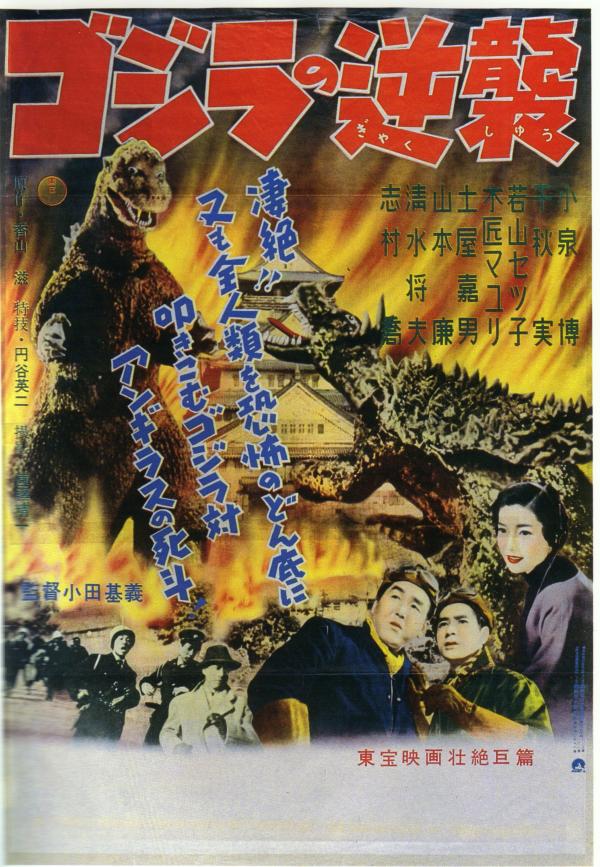
It was disheartening to sum up the recent Godzilla anime trilogy, the only Japanese Godzilla films I never plan to rewatch. Fifty-fifty with the Hollywood mega-millions epic Godzilla: King of the Monsters merely a few months away, the feeling of deflation inside my favorite moving-picture show franchise fabricated it necessary for me to plug a bit of promise into my schedule immediately. Not past watching a smashing Godzilla motion picture, mind you, but by watching a mediocre Godzilla motion-picture show. Why? Because it'south the best way to retrieve how even lesser entries in the series can offer some enjoyment. Like watching Godzilla actually move. This is a radical concept the anime filmmakers let slip past them.
Thus I present Godzilla Raids Again , a middle-of-the-road G-movie that's mostly faded into obscurity despite its prime position as the commencement Godzilla sequel.
To date, Toho Studios has released xxx-two feature-length Godzilla films. In any series with such longevity, a few installments slip off the pop culture radar. But it's well-nigh never the 2d movie that suffers this fate. The first sequel to a smash hitting, regardless of quality, is a major event. The many films that come after are where the grey of oblivion sets in.
Withal Godzilla Raids Again , released in 1955 only six months after the original, is one of the least seen of the Showa Era Godzilla movies. Many viewers exterior Nippon are unaware it exists. If they are, they may not know it's a Godzilla film at all because information technology was released in the The states and much of the rest of the world as Gigantis the Fire Monster . Godzilla'south name non simply vanished from the championship, it vanished from the dubbing. Not until 2006 did a North American DVD containing both the Japanese and US versions bring the picture out with the classic monster's proper name reattached. The DVD producers digitally superimposed the title Godzilla Raids Once again over the spot where Gigantis the Fire Monster one time appeared … although the dubbing with the name "Gigantis" remained.
How Godzilla became Gigantis then pulled a cultural vanishing act is quite the tale. Simply let's starting time expect at the actual Godzilla Raids Again, which is its own strange story and a stopgap moment in the early history of the Japanese giant monster (kaiju) film.
Godzilla Raids Too Speedily and Cheaply
Aye, Godzilla Raids Again premiered in Nihon a mere half dozen months after the original. If that sounds like also fast a turnaround, you lot're correct. Iwao Mori, head of Toho Studios, told producer Tomoyuki Tanaka to start prepping a sequel after Godzilla had been in theaters for only a calendar week. The Toho contumely wanted a quick cash-in on the popularity of Godzilla and didn't foresee a long-running picture show serial.
With a rushed schedule, reduced upkeep, and key artistic personnel missing, the film that arrived in theaters one-half a twelvemonth afterward was … not fantastic. To be generous, it's equally practiced as could be expected given the limitations. The box role receipts matched the film: profitable, but unremarkable. Toho dropped Godzilla until 1962 and turned to other giant monsters and SF films, Rodan and The Mysterians , which were huge hits in 1956 and '57.
Few fans have much regard for Gojira no gyakushu ("Godzilla's Counterattack" or "Godzilla'south Revenge"). The second and last Godzilla film shot in black and white and 1.33 aspect ratio, Godzilla Raids Again doesn't have much passion. The nuclear metaphor that made the original picture show so memorable is dampened, and the human story is poorly woven into the monster action and trite on its ain claim. When the monsters aren't on screen, a drape of ordinariness falls over everything.
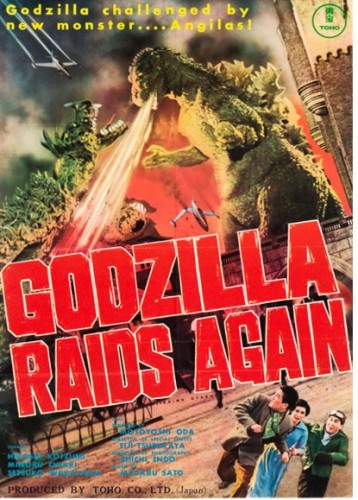
On the plus side, this is the outset Godzilla film to characteristic the famous monster fighting it out with another giant monster (Anguirus, a quadruped saurian with a horned shell), and some of the special furnishings sequences from Eiji Tsubaraya and his squad are impressive. The VFX section may take had less time to put together their effects, simply they already had experience overcoming the difficulties of creating giant monster magic.
The tight production schedule meant a primal figure in the success of Godzilla wasn't available: manager Ishiro Honda. Honda brought immense personal vision and earnestness to the first moving-picture show, merely he was already busy directing Honey Tide for Toho. The studio had to observe a replacement, and they picked journeyman director Motoyoshi Oda. It wasn't the right pick. Oda had trained in Toho's director programme under some of the greats, including Akira Kurosawa and Senkichi Taniguchi. Only Oda'southward career was mired almost entirely in programmers. Toho may take chosen him for Godzilla Raids Over again because he directed The Invisible Avenger in 1954 and had some experience with special furnishings. Oda didn't have Honda's investment in the fabric (the rushed script didn't help) and he handled the management with the aforementioned blandness every bit if it were any other assignment from his undistinguished filmography.
Also AWOL is Godzilla composer Akira Ifukube. In his place is one of the great composers in Japanese picture palace, Masaru Sato. Nevertheless, Sato was early in his career, and remarked later in life that the score to this film sounded like "a kid trying to learn." He'd later do great work for the Godzilla series, such equally the groove of Godzilla vs. Mechagodzilla and the tropical fun of Son of Godzilla . But his music here is bearding and doesn't bring the bolt of energy or nail of doom the picture show desperately needs.
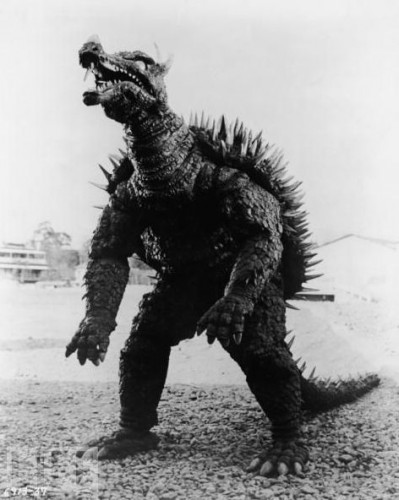
The monster side of the story is easy to summarize and requires almost no reference to the characters in the homo storyline. Another Godzilla (played again by stuntman Haruo Nakajima), belonging to the same species equally the 1 that perished in Tokyo Bay, is sighted on an island near Japan. This second Godzilla is contesting with some other huge prehistoric monster, a spiked carapace creature called Anguirus, which has a phonetic similarity to the Japanese pronunciation of the dinosaur Ankylosaurus. (In some English sources, the monster's proper name is spelled Angilas because of the ambiguity of the "R/L" audio in Japanese; the hard "R" sound doesn't exist as a distinct phoneme in the linguistic communication.)
Godzilla heads toward Osaka, and the urban center braces for an attack. The military, later on consulting with scientists who experience there's no hope to halt the monster, uses flares to distract Godzilla away from the populated port metropolis. But three convicts escaping from a paddy wagon (a sequence that seems to telephone in from another movie) drive a gas tanker into a petroleum establish, igniting an explosion that lures Godzilla back to shore.
As Godzilla makes landfall, and so does Anguirus, and the two monsters commence their titanic tussle while leveling the center of the urban center — including its cute sixteenth-century castle, i of Nihon'southward great landmarks. (Don't worry, it got rebuilt in fourth dimension for ninjas to railroad train there in You Simply Live Twice .) Godzilla kills Anguirus with a barbarous seize with teeth to the neck and and so roasts the corpse with a radioactive smash. Satisfied with the victory, Godzilla wades dorsum out to sea, leaving Osaka a smoking ruin—although a much less impressive ruin than the wreckage of Tokyo in Godzilla .
The monster moves toward the northern island of Hokkaido. Japanese Cocky-Defense jets attack the monster on a snow-covered islet with loftier peaks. Unable to destroy Godzilla directly, they switch tactics to utilise missiles to trigger an water ice barrage, which eventually buries the monster in a deep freeze, immobilizing it until King Kong vs. Godzilla seven years afterward.
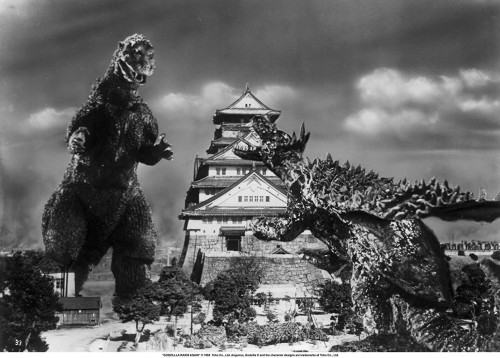
The principal draw of Godzilla Raids Again is the battle between Godzilla and Anguirus — the first confrontation between two monsters in the history of Japanese movies. Information technology'due south a thrilling fight that holds upwards well against many later on Godzilla spectaculars. The VFX crew was new at this type of action, but hurled themselves into making the battle as devastating to the models of Osaka as possible.
Anguirus is a wonderfully designed brute that exudes as much personality every bit Godzilla, a bit similar an aggressive but friendly dog. This helped to turn Anguirus into one of the most pop supporting monsters in the serial, commonly equally one of Godzilla's allies ( Godzilla vs. Gigan , Godzilla vs. Mechagodzilla ). Katsumi Tezuka, the stunt performer in the Anguirus costume, had to walk on his knees when Anguirus moved on all fours, but the staging and camerawork hide this, something the 1970s movies would handle far less adeptly.
The fight is choreographed in an animalistic fashion much different from the later anthropomorphized monster battles. Godzilla and Anguirus lunge at each other in a fury of bitter and clawing. At some points, the fight snaps into jerky hyper-motion, apparently a mistake by an inexperienced effects cameraman who set his camera at a lower speed. It ends upwards working surprisingly well as it comes as such a shock when the creatures appear to go fully ballistic vehement at each other
Effects principal Eiji Tsubaraya devised ingenious camera angles to moving-picture show the fight, and the opticals mixing fleeing people with the destruction creates a tangible sense of the monsters' size. There'south one superb effects shot of the fleeing convicts consumed with water rushing into a train station tunnel that'due south almost seamless. The model of Osaka Castle is the nigh impressive miniature, and the animated shots of it starting to cleft before Godzilla smashes Anguirus into it build tension equally the fight reaches its climax. The castle demolition must take thrilled Tsubaraya, since he knocks down feudal castles in the next 2 films, King Kong vs. Godzilla and Mothra vs. Godzilla .
The barrage assail on Godzilla at the cease is near as impressive furnishings piece of work, although it doesn't take the same blitz. It'south one of the virtually creative means of destroying a giant monster to appear in any motion picture of the genre, and Godzilla composed against the massive water ice-crusted cliffs makes for a number of stunning shots. It'south unfortunate the screenplay paces the attack in a way that it breaks in the middle while everyone goes to re-load their planes at the base. The build of the suspense gets hacked downward when it'due south fix to elevation.
The human story is lather opera piffle well-nigh the employees of a fishing company in Osaka whose lives intersect in unbelievable ways with the monster affair. Heroes Tsukioka (Hiromi Koizumi) and Kobayashi (Minoru Chiaki) pilot planes to spot schools of fish to guide the visitor's trawlers. Information technology makes sense two pilots might notice themselves on a distant island with the monsters, simply subsequently their discovery they don't have much else to exercise. In other movies, the focus would shift to the scientists and military men who take to halt the titanic dangers.
But after a debriefing scene — which contains the only appearance of a grapheme from the commencement picture, Dr. Yamane (Takashi Shimura) — Kobayashi, Tsukioka, Tsukioka'southward girlfriend Hidemi (Setsuko Wakayama), and the other employees at Kaiyo Line-fishing Industries keep to hang around the moving picture through contrivance. For instance, afterward the massive wreck in Osaka, the company decides to ship the main characters north to Hokkaido — so they simply happen to make it the way of Godzilla'southward movements. They also have a few practiced laughs standing in the demolished office in a leveled urban center, which feels wrong on many levels.
Virtually of the cast'due south interaction is boring. If information technology sometimes seems somber, that'due south probably the fault of the pacing, quiet soundtrack, and gloomy blackness and white photography. Afterwards the shift to Hokkaido, the movie almost grinds to a end for a ten-minute scene of a dinner party and Kobayashi looking for honey. The supposed "sacrifice" of Kobayashi during the concluding strafing run on Godzilla is supposed to exist the emotional capper, but Kobayashi only dies in a foolhardy accident, and that the Japanese Self-Defense Strength gets the thought for the avalanche from his crash is also an accident and nothing Kobayashi planned. Tsukioka's final words to his dead friend after Godzilla's icy burial is the simply moving moment to come out of this character expiry.
The other moment that stands out among the humdrum lather suds is Hidemi watching the city of Osaka burn from her hilltop house. The matte painting of the flaming metropolis, fabricated to resemble a mushroom cloud, is beautifully unsettling. Nosotros tin can imagine what thoughts are going through Hidemi's head knowing that her beloved is down amid the horrors. It'due south a cursory moment where Godzilla Raids Once more embraces the nuclear metaphor that made the showtime moving picture so powerful. It needs more of this and fewer jokes near matchmaking.
However, it's always a pleasance to see one of Toho's peachy science-fiction faces popular upwardly: Yoshio Tsuchiya, also a favorite of managing director Akira Kurosawa, appears as a member of the Cocky-Defence Strength who pilots the final attack on Godzilla. Tsuchiya appeared in several Godzilla films, most notably every bit the Controller of Planet X in Invasion of Astro Monster , a.one thousand.a. Monster Zero (1965), and as the saurian-worshiping World War II veteran in Godzilla vs. Rex Ghidorah (1991).
The Volcano Monsters and The Fire Monster: The US Version
What happened that caused Godzilla to exist changed into Gigantis in Due north America and then stop up in obscurity? Buckle in, this is a lengthy i.
The same grouping of Us financiers who purchased the rights to the original Godzilla also bought the rights to the sequel. Two of the financiers, Harry Rybnick and Edward Barison, made a deal with a fledgling production company, AB-PT, to re-craft the movie using merely the special effects footage and shooting a new story around information technology with English-speaking actors. Danish author Ib Melchior, who later on directed Angry Red Planet , and his roommate Edwin Watson created a screenplay called The Volcano Monsters to use the Japanese effects footage. Toho even sent an Anguirus and Godzilla costume to Hollywood so the crew could shoot a few new effects to stitch together the story. Equally an example of how this new movie was going to curve itself in club to squeeze the Japanese footage into a supposedly stateside monster moving picture, a radio journalist mentions the monsters are fighting in the "Oriental Section" of San Francisco. That totally explains the giant Shogun-era castle sitting in the eye of a Californian metropolis!
As clumsy, inane, and deadline insulting every bit all this is, The Volcano Monsters did come up close to starting production. But and then AB-PT's backers pulled out of the project. After releasing simply 2 films, the company was shuttered and The Volcano Monsters passed into limbo. Considering the similar butchering the Japanese giant monster flick Varan (1958) underwent to become the English-language Varan the Unwatchable — uhm, The Unbelievable — nobody mourns the loss of The Volcano Monsters.
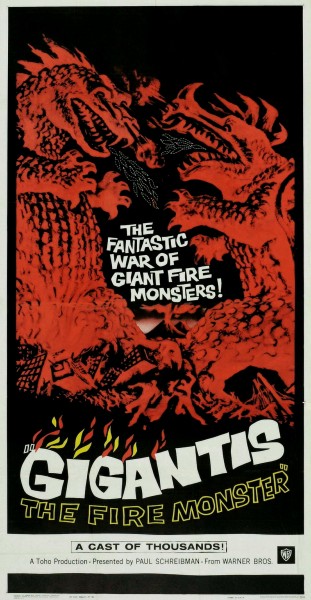
Godzilla Raids Over again went back on the market. Paul Schreibman, Edmund Goldman, and Newton P. Jacobs purchased the rights in 1958. They made a deal with Warner Bros. for distribution in a packet with the classic Mystery Science Theater 3000 movie Teenagers From Outer Space . The new owners didn't attempt a re-haul in the manner of The Volcano Monsters . Schreibman settled for a toll-constructive (i.e. cheap) road, but 1 that still radically contradistinct the pic — starting with stealing the star monster's name.
The big question: Why did Paul Schreibman rename and redub the film to erase Godzilla and supersede it with the uninteresting Gigantis? Schreibman's original answer was that he didn't want the film to exist confused with a re-release of Godzilla, Male monarch of the Monsters! That makes no sense; why would a producer looking for a fast buck not want people to connect his new movie to one of the most successful monster movies e'er made?
It appears Schreibman simply fabricated a miscalculation of the marquee entreatment of Godzilla and thought he could pass this off as a "new" monster. It was a mistake and a clumsy i, which he later admitted. The few viewers who got out to see Gigantis the Burn Monster in theaters weren't fooled by the ruse and were bellyaching instead. "It's clearly Godzilla! Why are people calling it 'Gigantis'?"
The moving-picture show was dubbed at Ryder Sound Services with a script overseen by Hugo Grimaldi. Grimaldi, not a native English language-speaker, filled the dubbing script with unintentionally hilarious tin-eared dialogue, such as the infamous "Banana oil!" line, a bit of slang that was out of date when the Volstead Act was repealed. One of the scientists, while attempting to explain the existence of Anguirus, claims to have gotten his data from a new book called Anguirosaurus, Killer of the Living. Grimaldi also crammed the script with nonstop voiceovers from Kobayashi (voiced past Keye Luke) that are literally a play-by-play of what's on screen. ("I picked upward my microphone." "I started to moving ridge.") Grimaldi may take gotten the idea for the voiceover narration from the King Brothers' version of Rodan , which reached the United states a year before Gigantis .
Nigh of Masaru Sato'southward music was replaced with wall-to-wall library music meant to brand the film seem more urgent, simply it quickly turns irritating. Schreibman as well heaped a load of stock footage into the movie to boost the activeness, which of form ways it opens with a lengthy montage of rocket launches while a vox-of-doom narrator (Marvin Miller, who played this part a lot) explains the dangers of nuclear testing, blah, blah, blah. The re-editing of the sound furnishings creates a funny error, where Anguirus's roar is dubbed over Godzilla's, even further robbing the monster of its identity.
The result is a ludicrously funny B-picture, and it leaves no doubt why people ignored the film on its original 1959 release. Although altered less than Godzilla when it was Americanized as Godzilla, Male monarch of the Monsters! , Gigantis the Fire Monster retains far less of the spirit of its original. But it does merit watching for weird amusement. Several famous voice-over artists lent their talents, including George Takei and the ubiquitous Paul Frees. But all turn in hammy, cartoon performances, probably at Grimaldi'due south insistence, and the delivery of the already baroque lines amps up the military camp value.
Especially entertaining is the motion picture that Dr. Yamane shows to the council of generals and scientists to explain Godzilla's threat. In the Japanese version, the footage is from Godzilla's rampage in the showtime film, played silent except for the eerie sound of the projector. It fits with the gloomier tone of the movie, and even if it isn't that exciting (thanks, I've seen Godzilla), information technology makes an impression. The version of this scene in Gigantis the Fire Monster contains abiding music, redundant explanations from the thespian voicing Yamane, and best/worst of all, additional footage lifted from children's educational strips explaining the loopiest theory of the evolution of the Earth ever foisted onto a '50s SF flick.
The Fire Monster Today
I enjoy Godzilla Raids Over again more than than I in one case did. I never saw the Usa version on television receiver when I was a kid — it was almost a lost film later on the early '60s because its owners never tried to sell it to Telly. My kickoff viewing was of the Japanese moving-picture show on an imported VHS tape. Information technology didn't concord my interest, feeling like a poor version of the original movie and too drab to lookout man regularly. These feelings are widespread among Godzilla fans.
Seeing it a few more times on superior quality DVD and comparing it to the craziness of Gigantis the Fire Monster has given me a greater appreciation for what does work: the special furnishings. Once I maneuvered around the bland state of the rest of the movie, I can thrill to the big prepare pieces of Godzilla vs. Anguirus and the avalanche assault, both of which accept some jaw-dropping visuals. The US hack-job tin can't mess this up, even with the unnecessary music and Godzilla forced to borrow Anguirus's roar.
My greater fan appreciation withal tin can't make me think Godzilla Raids Again is anything but the weakest of the outset 6 Godzilla films. Appropriately, it's the only of the six without director Ishiro Honda. On one side of it is the bleak masterpiece of Godzilla , and on the other are the colorful thrills of the full-blooded Japanese scientific discipline-fiction phenomenon. The Burn down Monster is the poor center child.
Godzilla Raids Again is ane of several Toho SF pictures whose N American rights the Criterion Collection currently owns. They accept yet to release any on DVD or Blu-ray, just they're currently streaming them on Starz. Although Benchmark has stated they accept plans to release their library of kaiju films (which includes Rodan , Mothra vs. Godzilla , Ghidorah, The Three-Headed Monster , and War of the Gargantuas ) on physical media, no official announcement has come in over a twelvemonth. Come up on, Criterion, step it up! At least these films have been liberated from Archetype Media's stingy grip.
Ryan Harvey (RyanHarveyAuthor.com) is 1 of the original bloggers for Black Gate and has written for the site for over a decade. He received the Writers of the Future Laurels for his brusk story "An Acolyte of Black Spires." His stories "The Sorrowless Thief" and "Stand at Dubun-Geb" are available in Blackness Gate online fiction. A further Ahn-Tarqa take a chance, "Farewell to Tyrn", is available as an eastward-book. Ryan lives in Costa Mesa, California. Occasionally, people ask him to talk most Edgar Rice Burroughs or Godzilla.
Source: https://www.blackgate.com/2019/01/19/godzilla-raids-again-gigantis-the-fire-monster-1955/
0 Response to "Godzilla Raids Again Blu Ray Torrent"
Postar um comentário